Prescribed Burning
Prescribed Fire for Woody Plant Management
Prescribed fire is a historic land management tool dating back to the American Indians, who used it to promote green grass for buffalo. The practice controls encroachment of woody plants such as juniper and mesquite and improves soil health by creating plant diversity. A third benefit is the removal of dead plant growth which can fuel wildfires. Prescribed fire is very effective in managing seedling trees and shrubs. The smaller or more immature encroaching brush, the more successful the prescribed fire will be in suppressing or killing invasive trees and shrubs. Fire is effective at suppressing resprouting brush such as: redberry juniper and mesquite. However, prescribed fire will kill non re-sprouting brush like: Ashe juniper, Eastern red cedar, pricklypear, etc.
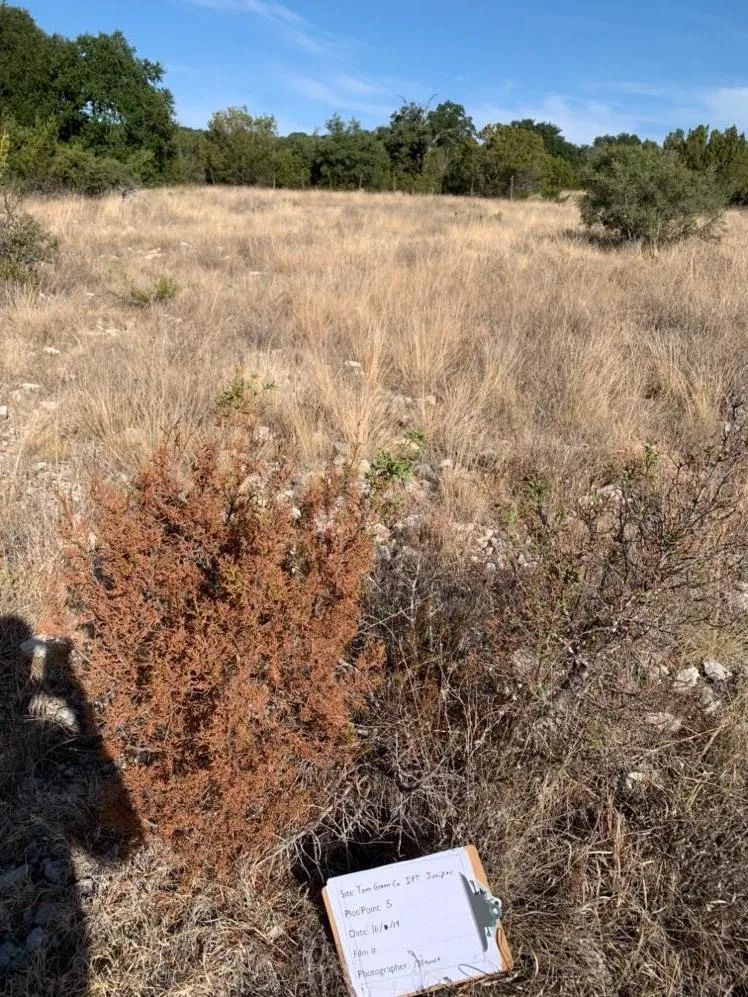
Figure 1. A small, immature redberry juniper seedling was suppressed due to a summer, growing-season prescribed fire. However, the larger trees in the background were left unaffected by the prescribed fire.
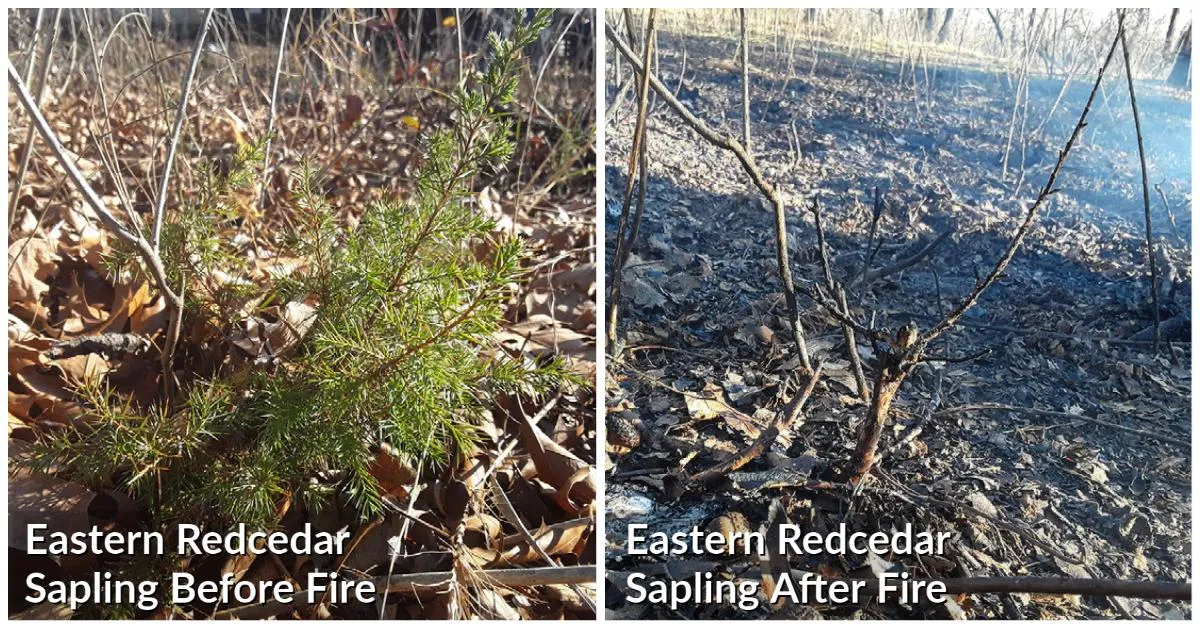
Figure 2. Eastern Redcedar seedling before (right) and following (left) prescribed fire.
Tree Species
Top Killed by Low Intensity Fire
Top Killed by High Intensity Fire
Mechanical or Chemical Control Needed
Source
Invasive Resprouting Trees and Shrubs Commonly Found Throughout the Great Plains
- Mesquite
- Honey locust
- Black locust
- Redberry juniper
- Sumac
- Dogwood
- Post Oak
- Winged elm
- Salt cedar
- Huisache
Invasive Non-resprouting Trees and Shrubs Commonly Found Throughout the Great Plains
- Ashe juniper
- Eastern redcedar
Prescribed fire can control non-resprouting trees like Ashe juniper or Eastern redcedar that are 6-ft. tall or smaller under average burning conditions. The following are prescribed fire conditions that will be effective:
- Air temp: 60-80
- Relative humidity 30-50%
- Wind speed: 5-10mph
- Fine fuel load: 2000lbs+/acre
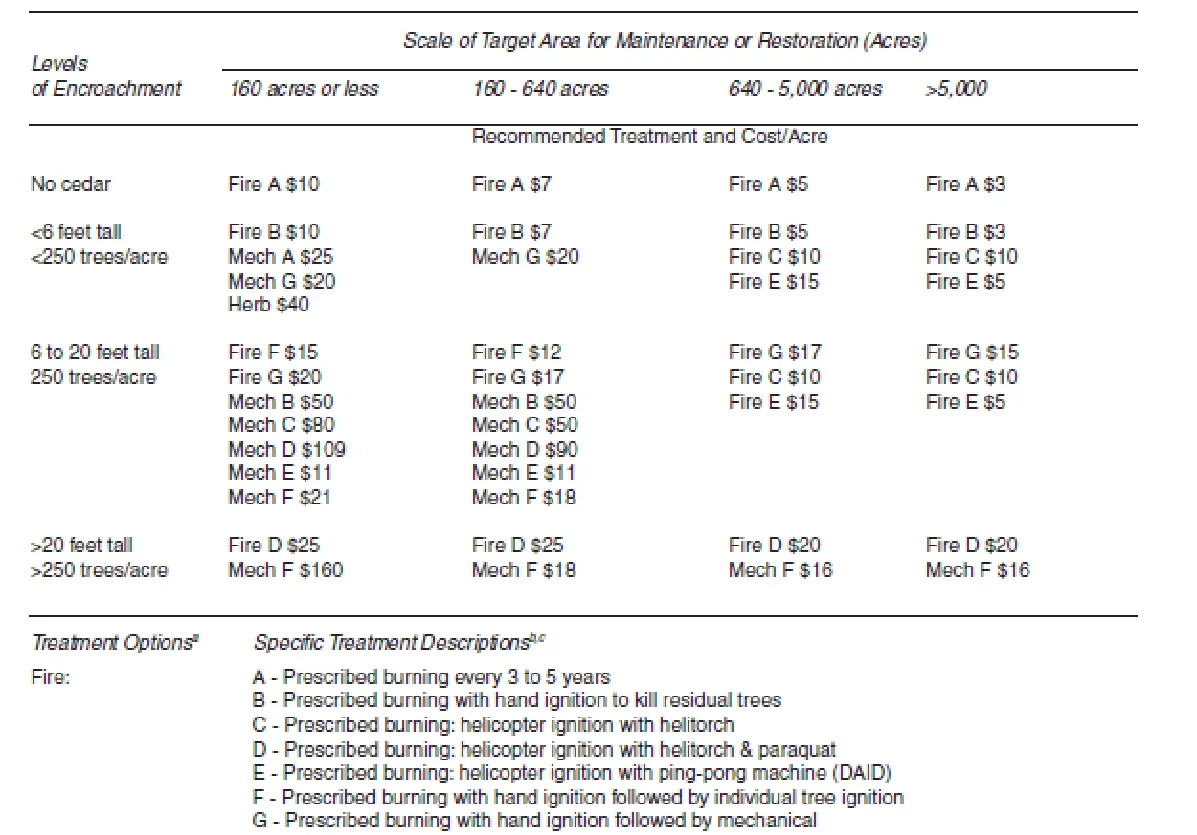
Source: Eastern Redcedar Control and Management – Best Management Practices to Restore Oklahoma's Ecosystems (factsheet NREM 2876)
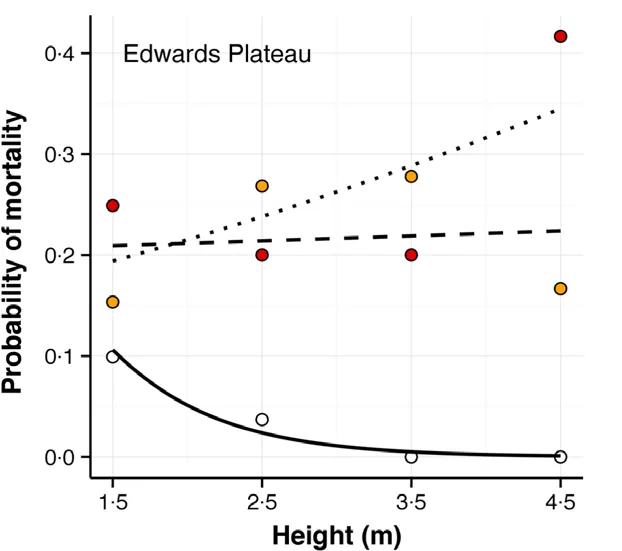
Figure 3. Relationships between shrub height class (m) and probability of mortality following extreme fire treatments in the Edwards Plateau of West-Central Texas.
Larger Tree Control
Larger trees and shrubs that are older, more mature, and typically taller than 6-ft can be managed with prescribed fire, but usually more than the initial fire treatment is required or intense fire effects. A single extreme fire in drought in the Edwards Plateau of Texas resulted in shrub densities that were 35–55% lower than shrub densities in control treatments.
The following are prescribed fire conditions that constitute extreme:
- Air temperature: 80 - 100+F
- Relative humidity: 10-20%
- Wind speed: 10-20mph
- Fine fuel load: 1500lbs+/acre
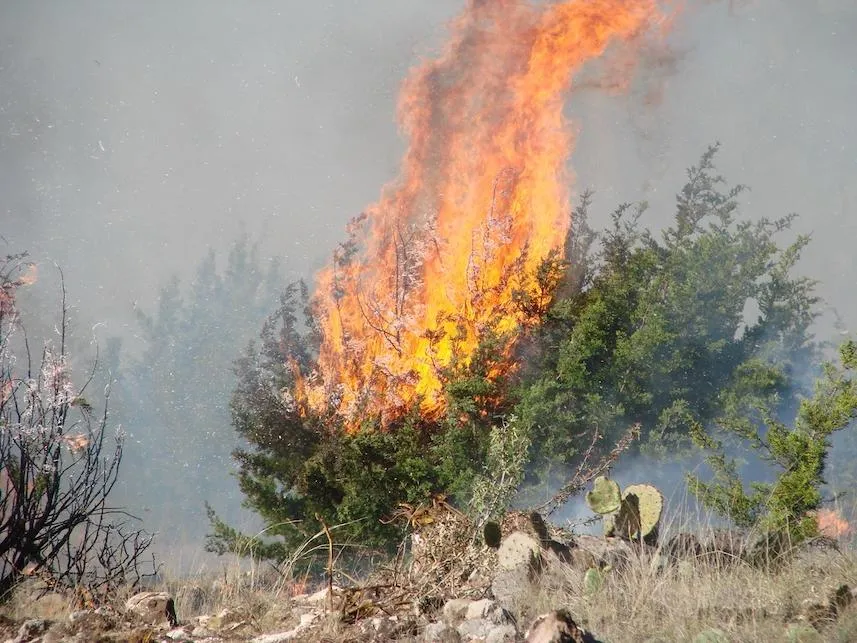
Figure 4. A mature Redberry juniper tree burns during a summer prescribed burn in the Edwards Plateau in West Central Texas.
Another option to achieve intense fire effects is to accumulate more fuel prior to burning. Consistent and heavy fine fuel loads will ensure appropriate amounts of consumption. Accumulated fuel loads will also increase the potential for fire to climb into ladder fuels that are adjacent to tree canopies. Patch burning can be an effective tool to achieve a heterogeneous landscape that optimizes plant species diversity.
Prescribed fire for livestock production
Prescribed fire in the spring helps plants start growth earlier and summer and fall prescribed fire helps plants continue growth later in the fall. This extends the season of palatable, high quality forage and reduces the amount of winter protein supplementation livestock producers need to feed.
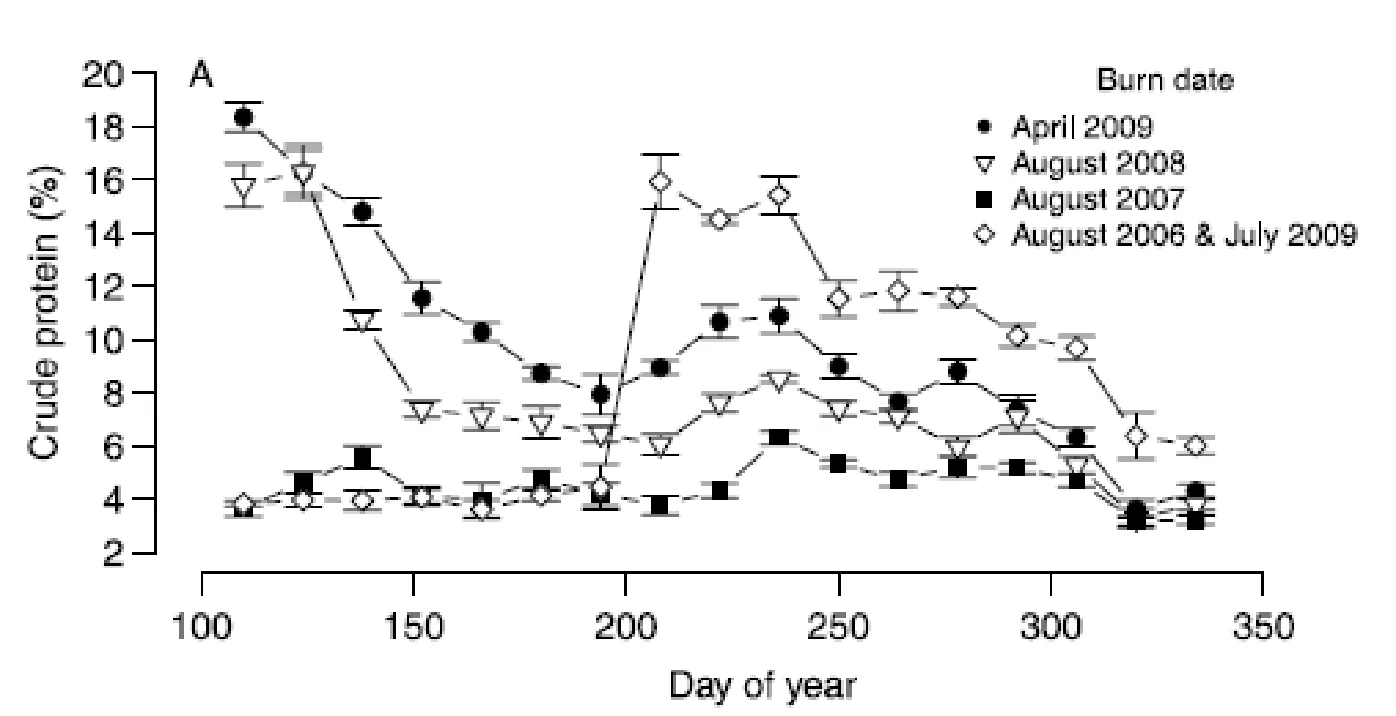
Prescribed fire is an effective method to change animal grazing patterns in a pasture. Areas far from water and areas with moderate slopes are normally avoided by most cattle. When these areas are burned cattle can spend up to 70% of their time on the recently burned patches.